
Why Erie Matters: A Global Work in a Local Context
Sometimes, the center of the art world is where you least expect it.
Written By Edward Patrick Kranz, PH’KAKI Creative Works
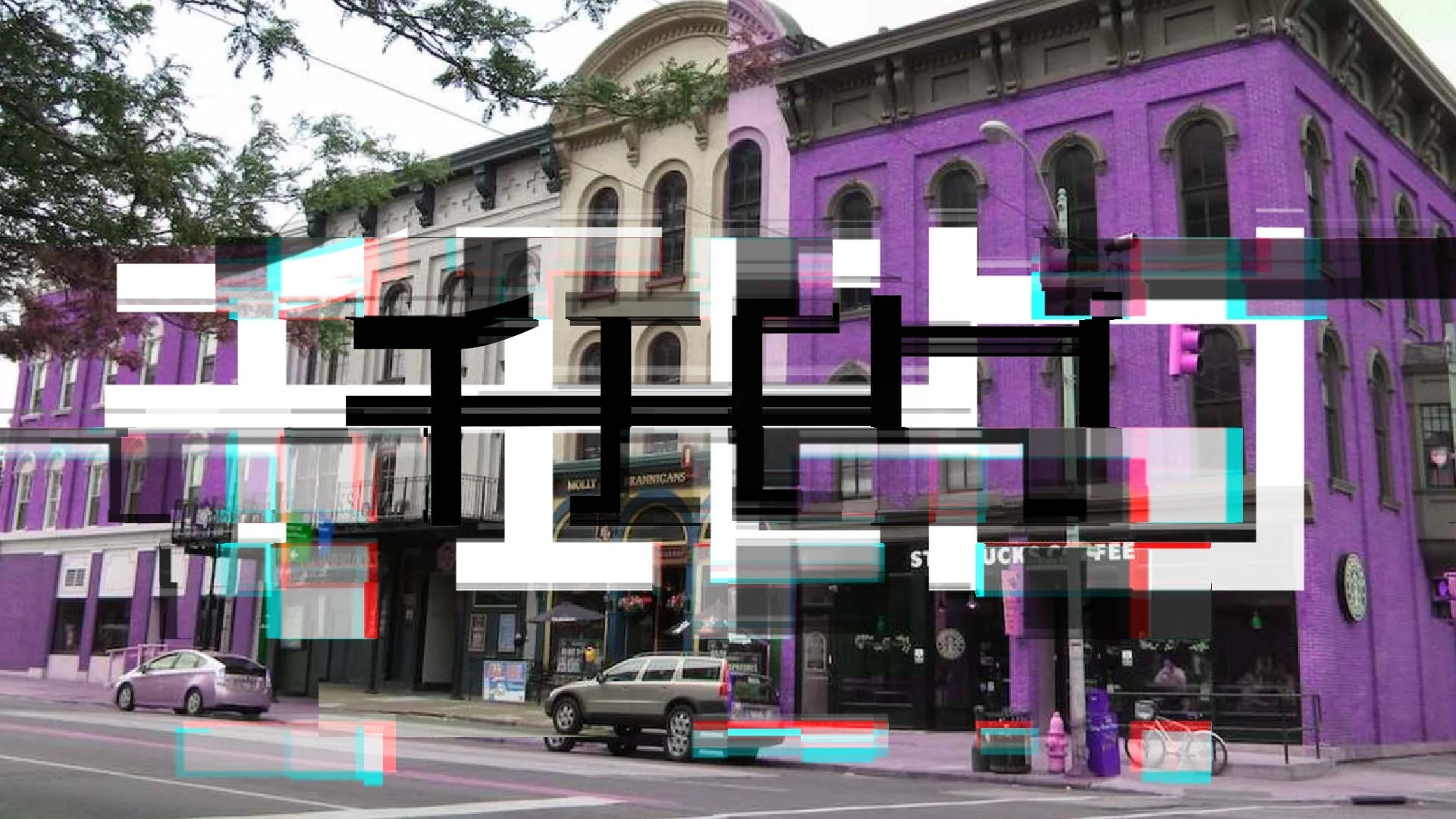
Downtown Erie, Pennsylvania
Stand inside FEED’s black box for one minute with the house lights down. The space registers as a single breath. The floor swallows reflections. The wall invites the eye to forget itself. Even with nothing on, the room has a signal. When sound arrives here, it does not echo a résumé. It meets a chamber designed for attention.
On December 13, ATOTAL: Sound, Light, and the Collapse of Order will occupy this chamber. Franck Vigroux will sculpt pressure and silence. Across from him, an unnamed visual architect will run a live codebase that listens to audio, then chooses how to respond. The night will be global by reputation and local by consequence. What happens in that hour matters to Erie because it declares a standard for how a city pays attention to art that refuses to flatter.
This article explains why that standard belongs here.
From a distance, Erie is a lake city between bigger headlines. It is described by what is near it. Cleveland. Buffalo. Pittsburgh. People who do not live here imagine winter and steel. They imagine something past its prime. Those images are not wrong. They are incomplete. The factories left silences behind, and some of those silences became rooms for work that needs quiet.
Attention migrated. Community reorganized itself around new signals. Galleries and studios found a scale that larger markets lost. Rent did not chase artists into debt. Audiences could try a difficult night and still afford the next one. That reality is not a romance. It is logistics. It is also why a piece like ATOTAL can land with clarity here that would blur in a larger market’s noise.
The place FEED built, and why that matters
FEED Media Art Center did not appear as a novelty. It arrived as an answer to a local need for a rigorous home for electronic and time-based work.
The gallery is intimate enough to hold a shared breath and technical enough to honor precise demands from artists who treat light and code like instruments. The projection plane fills peripheral vision without distortion. The sound system can ride from whisper to impact without collapsing. Staff and volunteers are trained to protect legibility rather than force spectacle. The ethos is simple. Clarity over volume. Conversation over hype.
That stance has consequences. Artists want this kind of room. Visiting practitioners calibrate the space in minutes because the variables are understood. Local audiences learn what to expect from work that trades comfort for honesty. The center is not a stage that hosts art like a guest. It is a workshop that asks art to demonstrate its method.
When a global project enters a local chamber like this, the room shapes the work and the work shapes the room. That reciprocal pressure is why Erie matters for ATOTAL.
This essay sits after four others that earned the reader’s trust. The Signal Before the Noise made the case for listening as a physical act. Franck Vigroux: Architect of Sonic Catastrophe profiled a composer who bends physics into feeling. Code That Breathes explained the visual system that acts rather than illustrates. When Sound Meets Light: Anatomy of ATOTAL mapped the systems that allow unity to form and then let go. Each piece moved from concept to practice to method. The point was not to market a night. The point was to train a city to read a difficult conversation.
This approach carries a civic wager. If a community learns to decode misalignment in a gallery, it may learn to decode misalignment elsewhere. The skill transfers. It changes how people use their attention in public. That is not a metaphor. It is muscle memory.
Erie as instrument, not backdrop
A night like ATOTAL does not ask Erie to pretend to be somewhere else. It asks Erie to be exactly what it is.
A city that knows about pressure. A city that understands drift after unity. A city that has learned to meet change without theatrics because theatrics drain energy needed for the next day. The lake teaches patience. The winters teach endurance. The grid teaches orientation. Those are not sentimental assets. They are practical ones.
When the room fills and the first low tone arrives, Erie will respond with the attention it has been practicing for years. Quiet will sit without apology. People will let small delays read as information rather than as error. The audience will feel a permission that is rare in bigger markets. You do not have to perform your understanding. You can simply notice.
ATOTAL reaches FEED because a regional network keeps attention alive between nights. Erie Arts & Culture invests in the slow labor that builds audiences. Erie Art Company helps keep the conversation public. Libraries, schools, and small studios share calendars and gear. The language crosses boundaries easily. Musicians attend projection mapping workshops. Coders sit through dance rehearsals. Photographers learn how to run sound without fear. None of this looks glamorous on paper. All of it matters when a touring artist arrives and asks for a very specific thing.
The network’s ethic is local competence first. That competence attracts global trust. Artists who care about their craft are not looking for brand velocity. They are looking for rooms that do not lie.
Benton Bainbridge talks about FEED’s mission like a builder, not like a marketer. He cares about how the grid is wired and how the chairs are placed. He also cares about where a night sits in a city’s memory. In a short conversation about ATOTAL, he spoke in simple phrases that reveal the center’s philosophy.
He said the room should never hide latency. He said lights should serve perception rather than attack it. He said Erie audiences are patient when you ask them to be patient on purpose. He said the goal is not to import novelty. The goal is to anchor standards.
What sits under those lines is a belief that generosity and rigor are the same thing when you give them enough time.
Cultural coverage in major cities often frames decentralization as a movement in need of a manifesto. Out here, it reads like the weather. The logic is straightforward. Bandwidth is scarce. Rent is lower. Rooms can be tuned with care. People know each other’s names. You can ask for silence and get it without a lecture. You can stage a night that depends on small timing differences and trust that nobody will hijack it for a selfie.
This is not an argument against big cities. It is a claim about scale. Some work needs friction and time. Erie offers both. The work answers by trusting Erie with premieres that carry risk. That exchange is the real story.
The ethics of intensity in a small city
High-volume events in small places can become power plays. ATOTAL avoids that trap. Franck Vigroux uses impact to illuminate structure rather than to dominate a room.
The visual architect uses bright fields to clarify timing, then steps back. The team calibrates the space so that discomfort carries meaning and does not serve as a dare. This is an ethics lesson disguised as design. It also sets a bar for future nights. Once a city recognizes the difference between coercion and clarity, it will not easily accept the lesser choice.
You will feel that difference on December 14. The most intense moments will read as invitations rather than as threats. The silence afterward will not feel like absence. It will feel like a door that remains open for as long as you need.
Erie’s audience has been trained by accumulated nights, not by a single campaign. People here can sit through uncertainty without reaching for their phones. They can hold quiet without a reminder on a slide. They recognize that a late flash can be more meaningful than a thousand obedient beats. They know how to step outside after a show and let the afterimage settle before they talk.
These are not small skills. They carry back into homes, schools, and council meetings. A population that has practiced attention is a population that can handle complexity without panic. The gallery becomes a rehearsal space for civic life.
During an October tech run for ATOTAL, I sat still at the very back while engineers traced cables and adjusted brightness the way a luthier adjusts a bridge. The early sync was exact. A low tone mapped the room and the image followed as if written on the same paper. Then the system chose memory over obedience. The visual field carried a trace forward that the sound had already abandoned. No one corrected the change. The next silence landed with a full body. I wrote a short note to myself. Trust the gap.
That note belongs to the city as well. Erie’s future will not be built by erasing the interval between sound and light. It will be built by teaching people how to live inside that interval together.
Touring artists speak candidly off the record. They will tell you when a place treats them like content and when a place treats them like craft. FEED falls into the second category. Word circulates that the crew cares about legibility. Word circulates that audiences arrive ready. Word circulates that the city gives time to the work rather than draining time from it.
Those reports matter more than quotes. They bring return visits. They bring collaborations that run longer than a single night. They also raise local expectations. Erie learns to expect quality without apology. That expectation is power. It forces the rest of the cultural ecosystem to raise its own bar.
None of this happens without budgets that favor time over spectacle. A calibrated grid does not look impressive in a press photo. It saves a night. A technician who knows how to seat a room is not a headline. They are the reason the headline happens. Donors who understand why a rehearsal hour is worth more than a social post are rare. Erie has a few. They deserve clear thanks and honest reporting on the returns that patience buys.
The return is simple to name. Nights that change how a person listens are more valuable than nights that trend for an hour. The latter is noise. The former is memory.
The signal in Erie’s other rooms
ATOTAL will not sit alone. The habits it demands link to a longer chain. Film programs that teach attention to duration. Workshops where coders and choreographers share tools.
Library talks that introduce the public to the idea that silence can be an event. A gallery where students hang work that challenges clarity and learn to revise for it. A city council session where microphones are tuned so that citizens can hear without strain. The signal moves across these rooms. It changes how people spend their nights. It changes how they spend their days.
When a performance like ATOTAL succeeds, it validates all of that quiet work. It signals to the city that the long bet was correct.
The phrase “decentralization of culture” often hides more than it reveals. In Erie it looks like a season where several small institutions coordinate so that audiences do not have to choose between three good nights in one evening and nothing for a month. It looks like sharing a projector rather than buying two that will sit idle. It looks like younger artists getting keys to a space after hours so they can perform a slow test without an audience. It looks like kindness that is also discipline.
From the outside, that inventory reads as modest. From the inside, it reads as a city teaching itself how to make difficult things possible.
At a cafe near the square, a performer who had just finished a residency at FEED said something that sticks. They said they never felt like a stranger here because the questions they got were practical. How do you want the wipe to read. Do you need a stable delay or the smallest possible one. Would you prefer a chair that rocks or a chair that does not move. Those questions proved that the venue knew how to read the work without pretense. It changed the tone of the week.
Small questions change big outcomes. They add up to trust.
This series preserves the visual collaborator’s anonymity by request. The choice fits the work. It turns attention away from biography and toward behavior. It also aligns with Erie’s ethic. This city is learning to praise not the personality but the practice. Writers can still find poetry in that stance because the poetry lives in motion, not in myth.
Keeping the name out of print will not dim the night. It will sharpen it. You will remember the behavior that argued with the sound rather than the face attached to it.
If this will be your first night in a room like this, give yourself two simple rules. Arrive early enough that your eyes adapt to the black. Sit still for a few minutes and let the nervous system drop its guard. During the performance, choose one small corner and hold your gaze there for long enough to feel impatient. Then scan the whole field. Repeat that sequence twice. The alternation will make drift legible. When you sense the first late flash, do nothing. Notice your reflex to fix. Let the reflex pass. The work will take it from there.
This method does not require schooling. It requires patience. Erie already knows how to hold that.
What success will look like on December 13
Success will not look like a line on social media. It will sound like silence that lands without a prompt. It will look like shoulders lowering as sync gives way to conversation.
It will feel like a room that remains seated through a long stop because the stop is part of the score. It will continue on the sidewalk where people speak softly and blink as if clearing an afterimage. It will extend into the next month when a teacher brings a class to FEED because the work taught them a way to organize a lesson around attention instead of around speed.
That measure of success belongs to a city that learned to prefer signal to heat. It is the only metric that lasts.
ATOTAL will end, and the building will go quiet again. The lessons can stay. Quiet can be defended without apology. Drift can be read as information rather than as failure. Latency can be a tool. Impact can be calibrated. Names can step aside so behavior can step forward. Cities can set standards without shouting.
If those lessons feel abstract, translate them into daily acts. In a meeting, let silence carry meaning. In a classroom, teach a line that refuses to close so students learn to live inside ambiguity. In a store, turn the music down until customers can hear each other speak without strain. In a concert next month, pay for a rehearsal hour rather than a photo. The signal will return the investment.
I will work on December 13. I will hold the door closed for a few minutes after start to protect the first silence. I will smile at late arrivals and invite them to enter at the first wipe. Some will stay. Some will leave. The ones who stay will learn that rules can feel like care. When the night ends, I will stand outside and listen to the room leak into the street. That sound is not measurable. It is real.
Erie matters because it lets that kind of sound exist. The city built a chamber for it. The chamber trained a public. The public now trains the work it receives. That loop is a gift and a responsibility.
On December 13, step into FEED and bring your patience. Bring the curiosity you use when the lake is flat and a wind you cannot see presses a single ripple across the surface. Bring the discipline this city teaches by necessity. Then take a seat and let a global conversation become a local act. You will not watch a product. You will watch a relationship. You will learn how unity forms, how it loosens, and how letting go can reveal more truth than holding tight.
Sometimes, the center of the art world is where you least expect it. Stand in that center for an hour. Then carry it home.
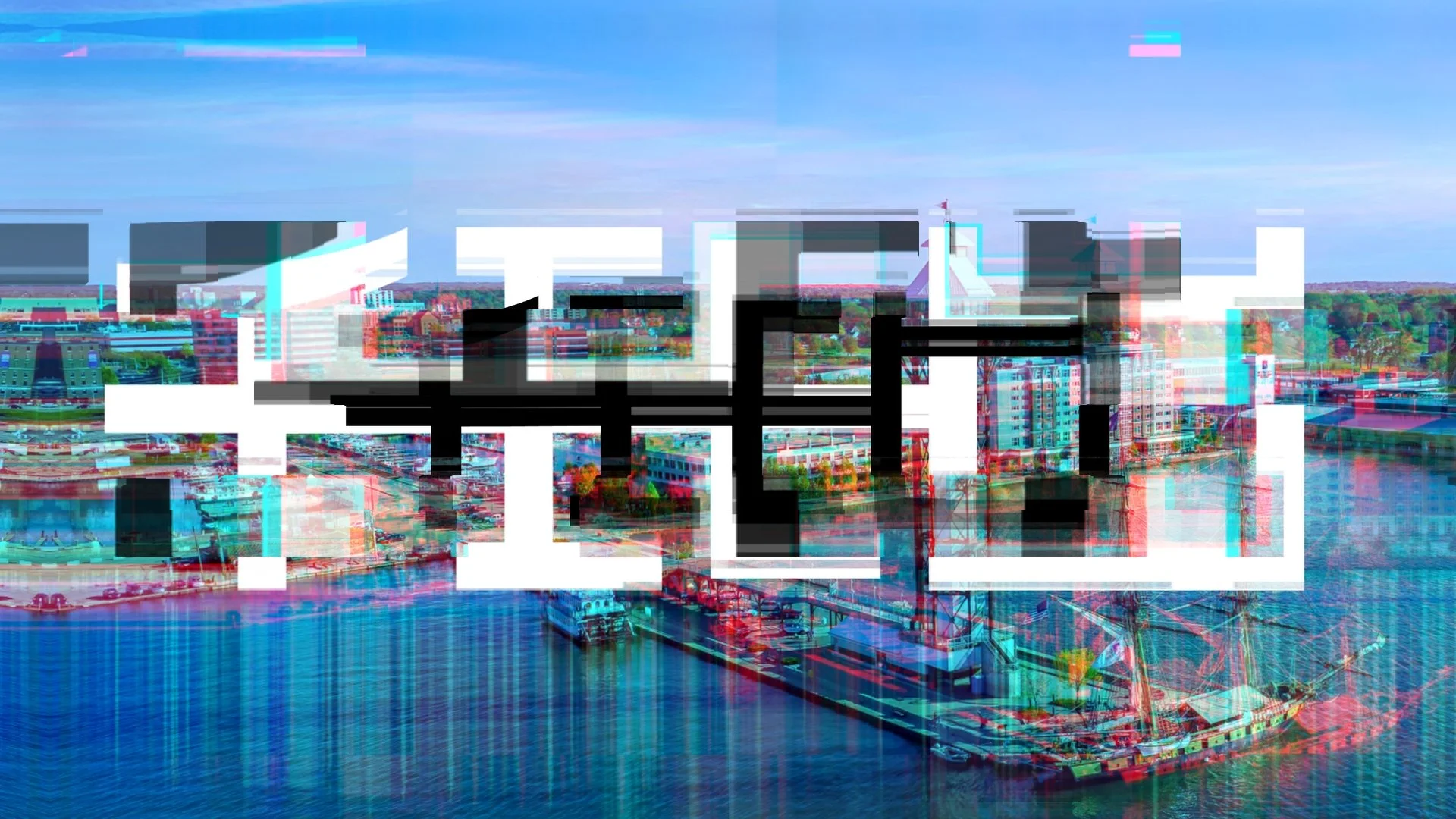
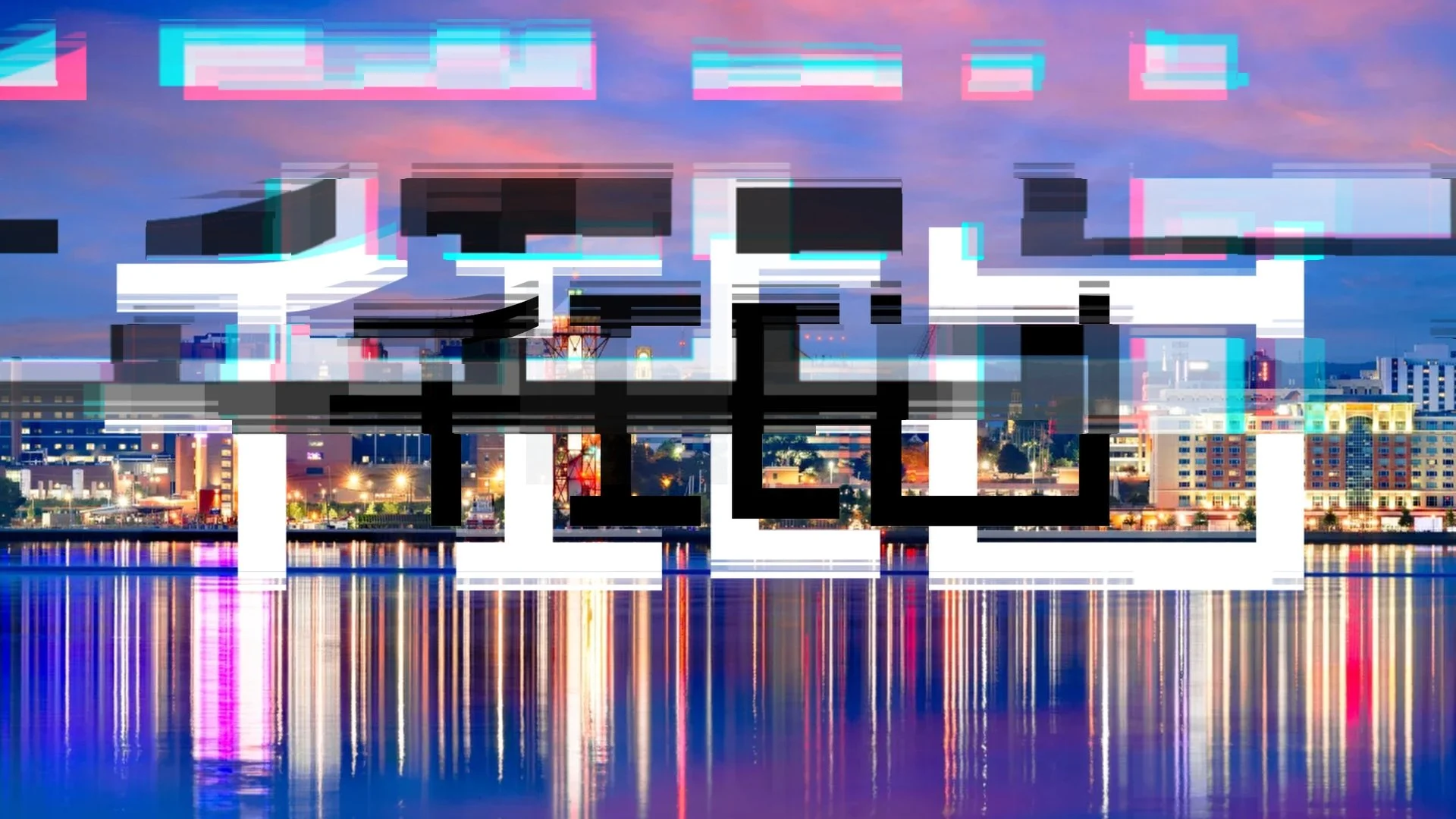
Downtown Erie, Centennial Tower, and the Brig Ship Niagara…the Erie Glitch from FEED Media Art Center!